
Sandblasting & Abrasive Blasting Auckland
Expert surface preparation for optimal coating adhesion. Remove rust, old paint, and contaminants to prepare your metal for a perfect finish.
Get A Free QuoteWhat is Sandblasting and Why Does Surface Preparation Matter?
Sandblasting — also called abrasive blasting — is a surface preparation method widely used across Auckland for steel, aluminium, and iron. Compressed air drives abrasive media at high speed against a surface, stripping away rust, old paint, mill scale, weld spatter, and other contaminants and leaving bare metal that is clean and profiled, ready to accept a coating.
If you have ever seen a coating peel, flake, or bubble within months of being applied, the cause is almost always poor surface preparation. It does not matter how good the coating is — if the surface underneath is not clean and properly profiled, nothing will stick properly. Sandblasting gives the coating something to grip onto. The tiny peaks and valleys left by abrasive blasting create mechanical adhesion, which is what holds powder coating, paint, and zinc arc wire spray in place over the long term.
At Coating Lab in Onehunga, Auckland, surface preparation is the first step in most finishing work. The item is blasted, inspected, and moved straight through to coating — no sitting around waiting to flash rust. That is how you get a finish that actually lasts. To learn more about how the process works, check out our guide on what sandblasting is and when you need it.
Types of Blasting Media We Use
There is no single media that works for every job. The material you are blasting, the condition of the surface, and the coating going on afterwards all determine which abrasive we reach for. Here is what we work with:
- Garnet: Our go-to for general steel and iron work. It cuts well, leaves a solid surface profile, and produces minimal dust compared to some alternatives. Ideal for structural steel and fabricated components heading for powder coating or paint.
- Aluminium Oxide: A hard, fast-cutting abrasive. We use this when we need an aggressive profile or when working with harder alloys. It is reusable and gives a consistent finish.
- Glass Bead: A softer media used for cleaning aluminium, stainless steel, and other surfaces where you need to remove contamination without cutting into the base metal. Good for achieving a satin finish on decorative metalwork.
- Steel Grit: The heavy hitter. Used for removing thick rust, heavy mill scale, and stubborn coatings from structural steel. Leaves a deep angular profile for maximum coating adhesion.
- Crushed Glass (Crusite): A recyclable option that works well for general surface preparation. Environmentally friendlier than many alternatives, with good cutting performance on mild steel.
We select media based on the job, not habit. If you are not sure what your project needs, bring it in or send us some photos and we will sort it out.
What Surfaces and Materials Can Be Blasted?
Abrasive blasting works on most metals, but each material needs a different approach. Pressure, media type, nozzle distance, and technique all change depending on what we are working with. Here is what we handle regularly:
- Mild Steel: The most common material. Structural beams, plate, tube, RHS, angle — all common steel forms. Blasted to a clean profile and moved straight to coating.
- Aluminium: Requires a lighter touch. We drop the pressure and switch to glass bead or fine aluminium oxide to avoid warping or excessive material removal. Essential prep before powder coating aluminium components.
- Cast Iron: Pump housings, engine blocks, machine bases — cast iron responds well to garnet or steel grit blasting. We remove the casting skin and any corrosion to give the coating a solid foundation.
- Stainless Steel: We use dedicated media (never anything that has touched mild steel) to avoid contamination and surface rust. Glass bead is typical for stainless work.
- Galvanised Steel: Sometimes we need to profile galvanised surfaces for paint or powder coat adhesion. A light sweep blast with fine garnet does the job without stripping the zinc layer completely.
- Wrought Iron: Gates, railings, decorative pieces — wrought iron benefits from blasting to get into all the detail and remove every trace of old paint and rust before recoating.
Sandblasting Applications
We see a wide range of work come through the door. Sandblasting is not limited to one industry — if it is metal and it needs a coating, it almost certainly needs blasting first. Here are the main areas we cover:
Structural Steel
Beams, columns, purlins, brackets, and connection plates for commercial and residential builds. Builders and steel fabricators send us structural components that need blasting before protective coatings go on. Whether the steel is heading for powder coating, wet spray paint, or zinc arc wire spray for corrosion protection, sandblasting is always the first step.
Fabricated Components
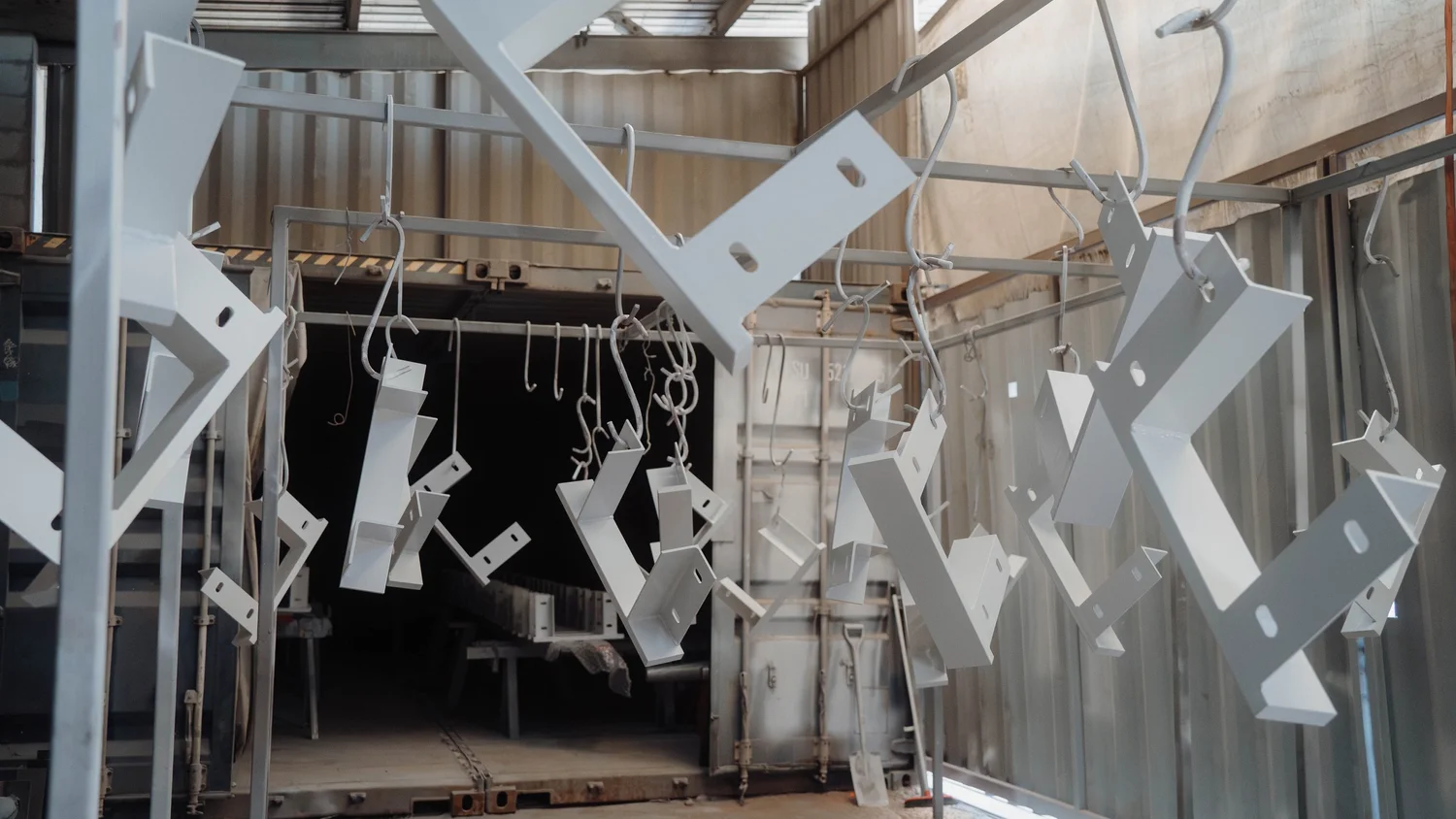
Welded assemblies, brackets, frames, machine guards, hoppers, tanks, and custom fabrications. After welding, steel develops heat discolouration, weld spatter, and mill scale that all need to come off before coating. We blast fabricated items to a uniform profile so the finish goes on evenly.
Automotive and Restoration
Car chassis, suspension components, subframes, wheel arches, and panels. We strip old paint, underseal, and surface rust to get back to clean metal. Blasting is the most thorough way to prepare automotive parts for fresh paint or powder coat — it reaches into every crevice that sanding by hand would miss.
Architectural Metalwork
Balustrades, handrails, gates, fences, outdoor furniture, light poles, and custom flashings. Architectural metal is often exposed to the elements, so surface preparation is critical for coating longevity. We blast and coat architectural metalwork for builders, architects, and property owners across Auckland.
Marine and Industrial Equipment
Boat fittings, anchors, deck hardware, industrial machinery, and processing equipment. Salt air and industrial environments are harsh on metal surfaces. Blasting removes built-up corrosion and contamination so that protective coatings can do their job properly.
Sandblasting for Fabricators and Sheet Metal Companies
If you run a fabrication shop or sheet metal operation in Auckland, you know the value of having a reliable blasting and coating partner. We work with fabricators daily and understand how your workflow runs. You need your steel blasted, coated, and back to you or delivered to site without delays holding up the rest of the project.
We handle batch jobs — whether that is twenty identical brackets or a full run of structural steel for a commercial build. We manage the full sequence from sandblasting through to powder coating or zinc arc wire spray. That means one point of contact for you — no need to coordinate between separate blasters and coaters.
We are also set up to handle ongoing work. If you have regular runs that need blasting and coating, talk to us about how we can fit into your production schedule. We are straightforward to deal with — no runaround, no surprises. Ring us on 09 218 6436 or send the details through to workshop@coatinglab.co.nz and we will get you sorted.
Our Sandblasting Process
- Assessment: We look at the material, its condition, and the coating that is going on afterwards. This determines the media, pressure, and approach.
- Media Selection: We choose the right abrasive for the substrate — garnet for steel, glass bead for aluminium, and so on.
- Blasting: Items are blasted to a consistent surface profile across the entire piece.
- Inspection: We check the surface for cleanliness and profile. Any areas that need further attention get hit again before moving on.
- Straight to Coating: Freshly blasted steel will start to flash rust within hours if left exposed. We move items directly into the coating line to protect the prepared surface.
Get a Quote for Sandblasting in Auckland
Whether you have a single item or a full production run, we can handle it. Drop your parts into our Onehunga workshop, or get in touch with photos and dimensions for a quote. We will tell you what is involved and when you can expect it back.
Frequently Asked Questions
Most metals can be sandblasted including steel, iron, aluminium, brass, and stainless steel. We select appropriate media and pressure for each material. Delicate items like aluminium require gentler treatment than heavy steel.
When done correctly, sandblasting doesn't damage metal - it cleans and profiles the surface. We adjust media type, pressure, and technique based on the material to ensure safe, effective cleaning without warping or damage.
Sandblasting is faster, more thorough, and creates a surface profile for better coating adhesion. Chemical stripping is slower and doesn't profile the surface. For most coating applications, sandblasting is the preferred method.